Showing posts with label Field. Show all posts

Sunday, July 03, 2011

Sparrow Headache


Went for a walk in the field and kept getting different sparrow photos.
And I'm like, oh no, yet *another* sparrow. LOL
Sparrows are so difficult to identify.
I think I probably ended up with several ones I already have, Grasshopper, chipping, clay-colored, etc.
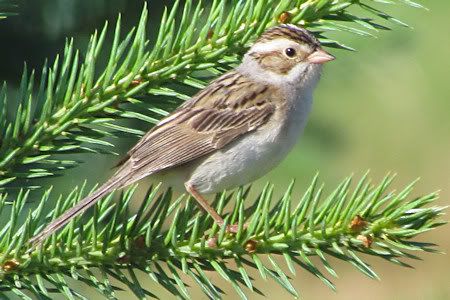
I like this one of the clay-colored sparrow (previously):


One sparrow photo really has me stumped, but I didn't like the background on it anyway, so I'm going to see if I can get something better before I blog it. I saw a juvenile robin out there also.

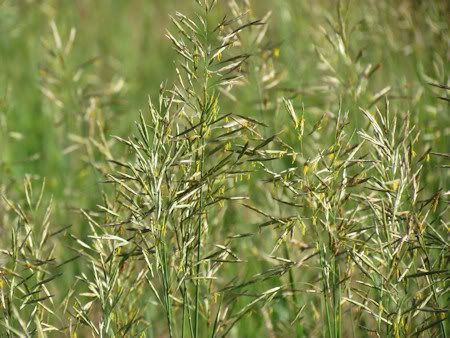
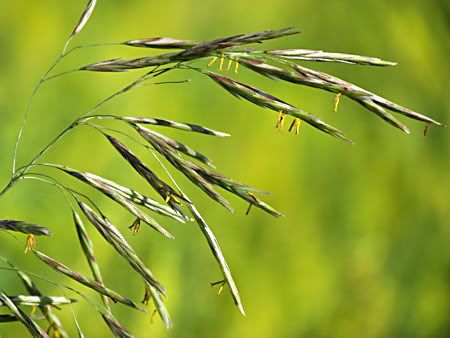
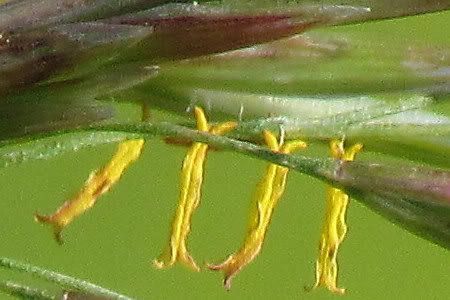
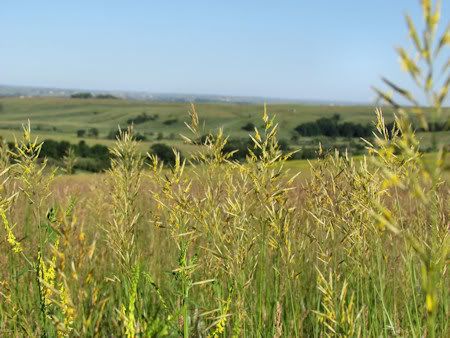
Here's some of the grass photos I like:


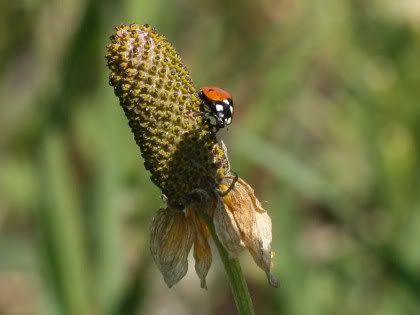
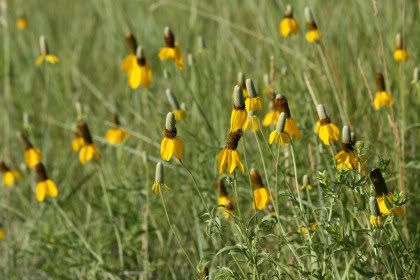
No coneflower blossoms yet, but they're coming up.
Too much yellow sweet clover in the field this year. I hope it's not taking over.

Tuesday, August 25, 2009

Walk In The Field - It is Finished


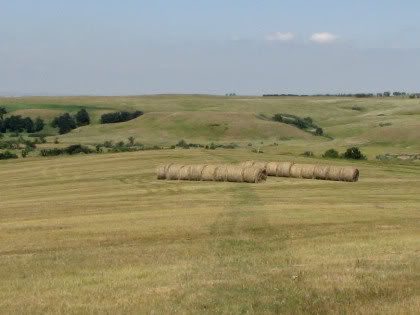
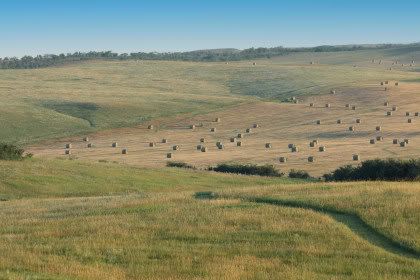
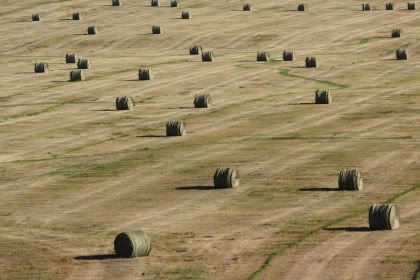
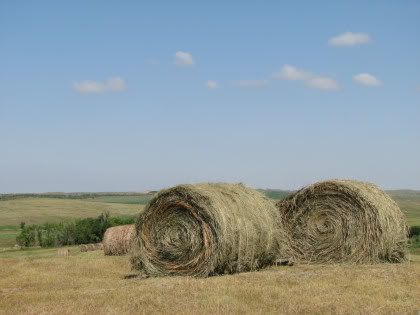
The field has been harvested.
All done.
Good times had by all.

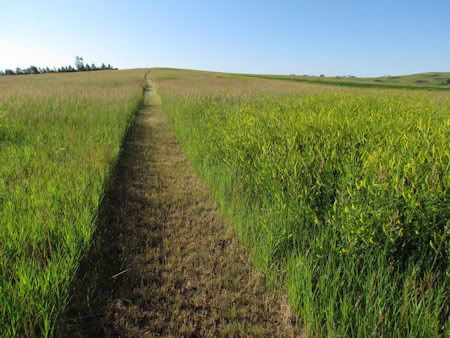
The trail after: (Can still see my mowed trail.)


The trail before.

A few "remnants" in the ditch:


Monday, August 17, 2009

Mummified


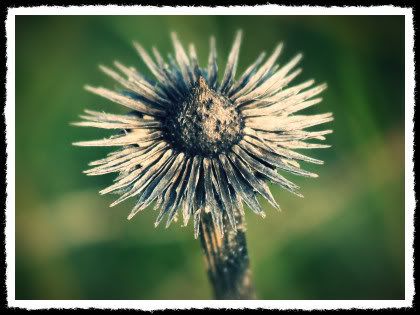
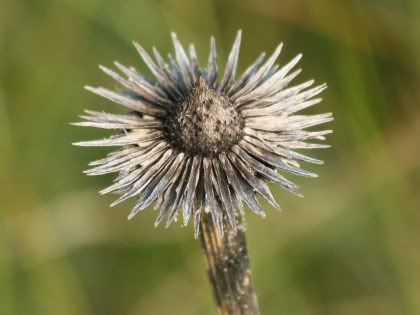
An oddball I found in the field on 1 Aug 09. I call it the mummified anomaly.
I wanted to do something different with it.
I thought a sepia tone maybe, but did not like it.
I applied the cross processing effect I blogged about earlier. Then added vignetting and a photo frame from a photo aging kit I had within Filters Unlimited.
Here's the before pic:

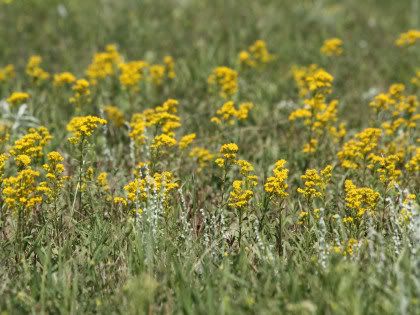
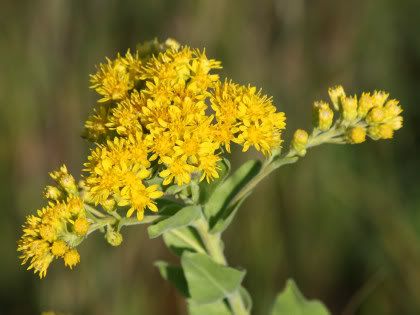
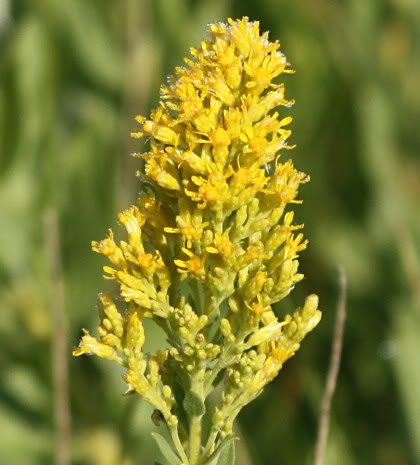
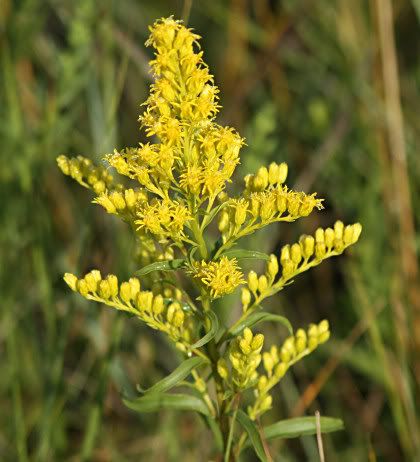
Goldenrod


About the only thing I have yet to post from the field are different kinds of goldernrod.
It's taking a long time to blossom and I'm not getting very good photos of it. Seems like there is too much yellow and the pics lack definition/contrast and look blah.

I'll post some closeups of what's blossoming so far, and that's probably it. I've lost interest in it.


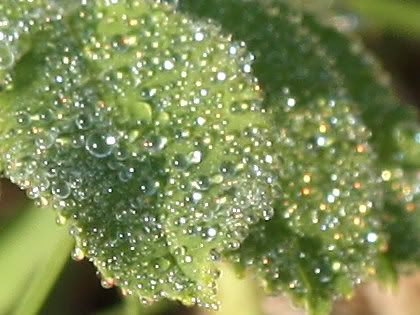
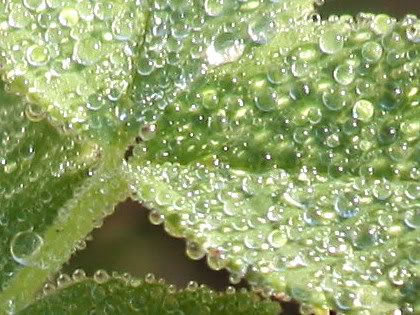
(Those white spots are morning dew.)


npwrc
Under Asteraceae (The Aster Family)
Shows 5 types of goldenrod:
1. Canada Goldenrod (Solidago canadensis)
2. Prairie [Missouri] Goldenrod (Solidago missouriensis)
3. Soft Goldenrod (Solidago mollis)
4. Gray Goldenrod (Solidago nemoralis)
5. Rigid Goldenrod (Solidago rigida)

That about wraps it up for My Walk In The Field Series.

So month of August:
Goldenrod
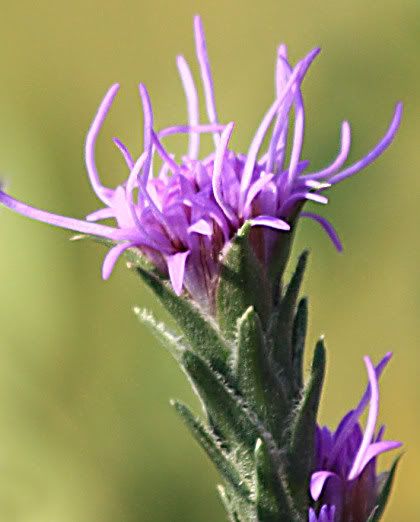
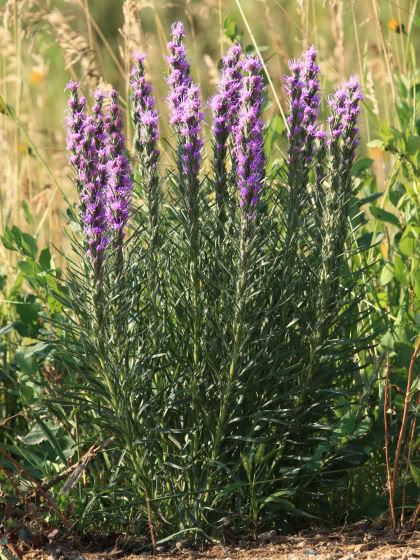
Blazing Star
Sunflowers
Curlytop Gumweed

Month of July:
Purple Coneflowers
Prairie Coneflowers
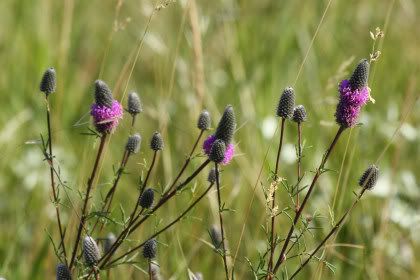
Prairie Clover
Wild Bergamot (Beebalm)
And more - July is the booming month for prairie wildflowers.

Wednesday, August 12, 2009

Monday, August 10, 2009

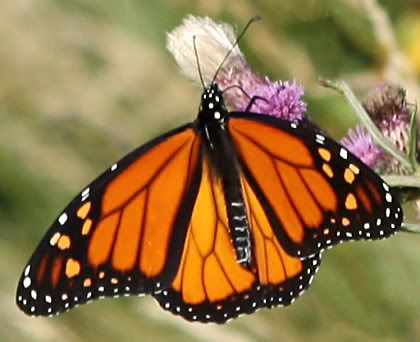
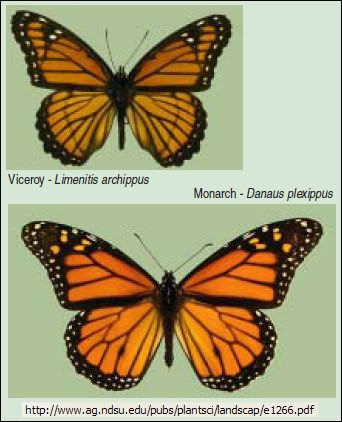
Butterfly - Monarch


Monarch (Danau plexippus)

bugguide
"...compare Viceroy, which has a dark line across hindwing and is smaller."


See ND Butterflies
(pdf file mentioned here)

Besides the Viceroy, there are Queen and Soldier under the Genus Danaus
which look similar to the Monarch.

In ND butterfly pdf it says that "occasionally, a second species, the Queen [Danaus gilippus] butterfly strays into the Northern United States." (pg 8 under milkweed butterflies)

Soldier (Danaus eresimus) is not in North Dakota.

butterfliesandmoths.org

enature

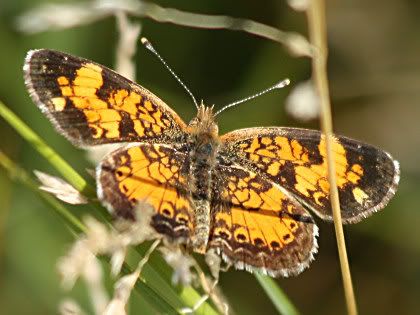
Butterfly - Northern Crescent


Northern Crescent (Phyciodes cocyta)

bugguide

enature

butterfliesandmoths

ND Butterflies (Previous post)

Thursday, August 06, 2009

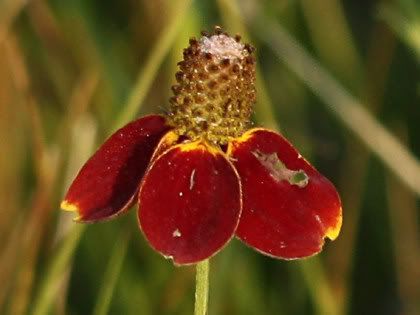
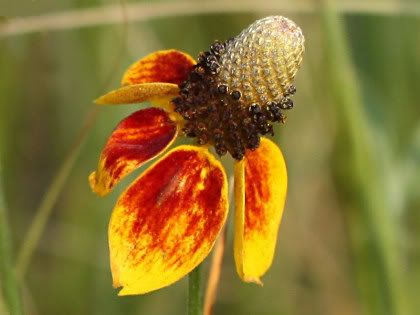
Mexican Hats


In the field I'll come across some different colored prairie coneflowers (Ratibida columnifera) once in a while. Not sure why.
Pretty though.
Pics taken the 1st and 4th of August.
The coneflowers have definitely peaked a while ago already.

Sunday, August 02, 2009

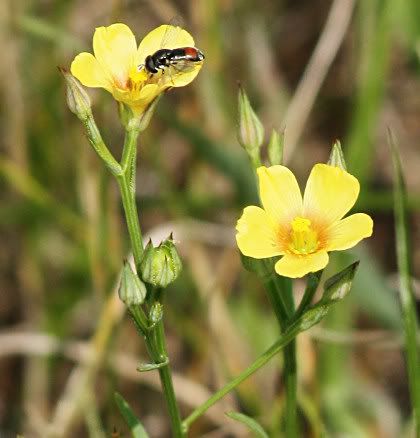
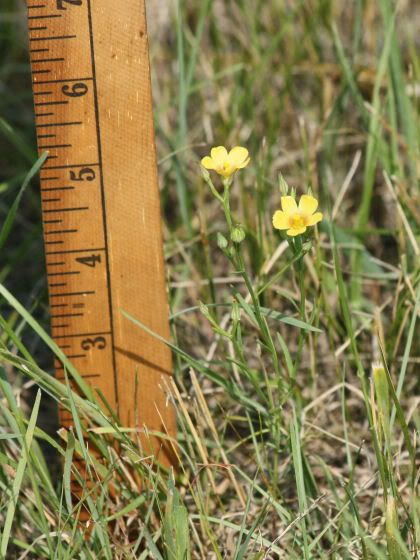
Walk In The Field Part 35 - Grooved Flax


I think this plant is Grooved Flax (Linum sulcatum).


Only 5 inches high. I had a companion to hold the yardstick, so we measured many of the plants that trip. There was another grooved flax plant that was about twice as tall, about 10-12" maybe? So it does get taller than this.

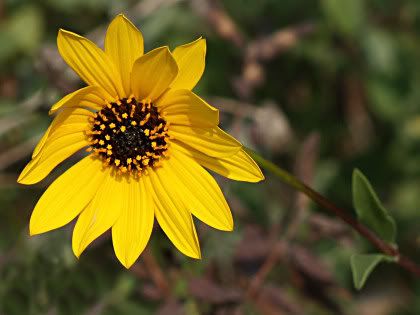
Walk In The Field Part 34 - Stiff Sunflower


I only saw a few sunflowers in the field so far, but I'm expecting more to pop up.

Identifying sunflowers seemed difficult.
I think this one is Stiff Sunflower (Helianthus rigidus).

Synonym:
Helianthus pauciflorus

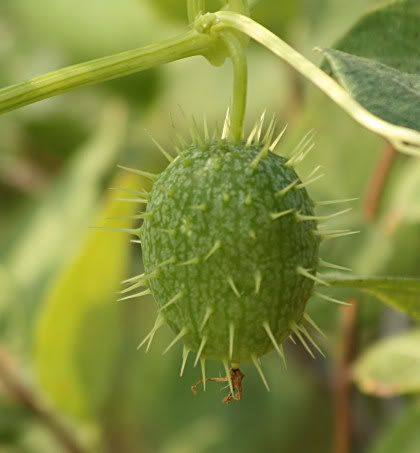
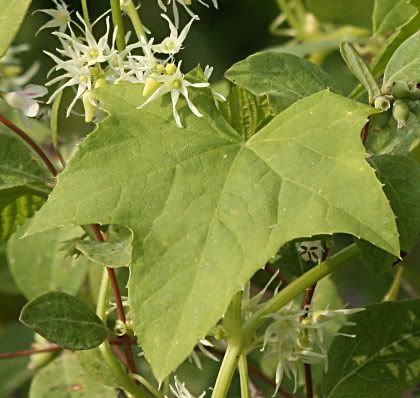
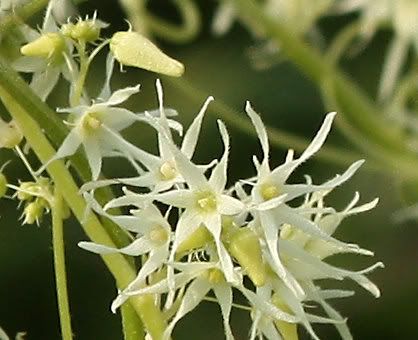
Walk In The Field Part 33 - Wild Cucumber


Wild cucumber Echinocystis lobata

Found down by the creek wrapped around some buckbrush.

Thursday, July 30, 2009

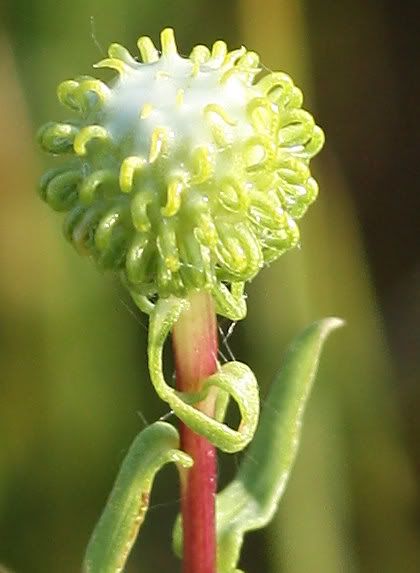
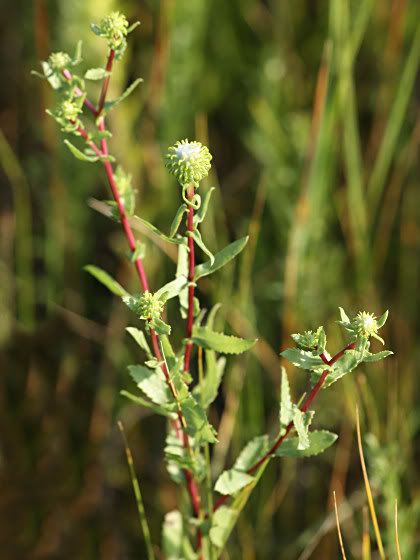
Walk In The Field Part 32 - Curlycup Gumweed


Lots of unknown plants that I'm waiting to see blossom before I id and post.
This Curlycup gumweed hasn't blossomed yet, but I was able to id, anyway.
It's called "noxious" and/or "invader," but from a photographer's telephoto perspective it's fabulous stuff.

npwrc
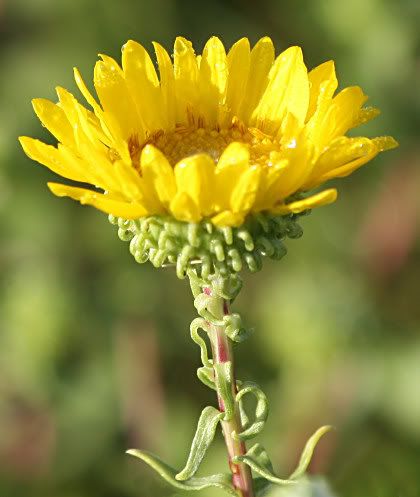
Curlycup gumweed (Grindelia squarrosa)
Family name: Aster (Asteraceae)

npwrc2
"...a biennial that blooms and dies during its second growing season.

The most characteristic feature is the curly involucre (group of scale-like leaves around the flower head) which exudes copious amounts of sticky resin. "

ndsu
Other names: Tarweed, Resinweed
Species: Grindelia squarrosa (Pursh) Dun.

usda
Grindelia squarrosa (Pursh) Dunal

usda2
Yardstick image

I'll post some flowers when they blossom and if I get some good shots of them.

UPDATE
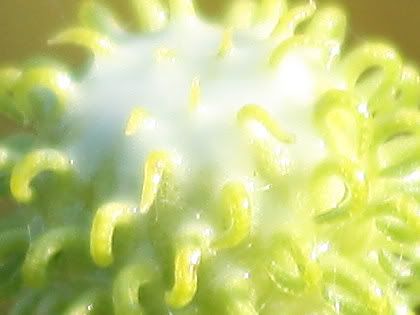
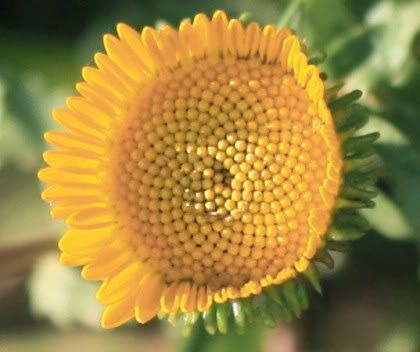
Here's a nice blossom:


I like this spiral:

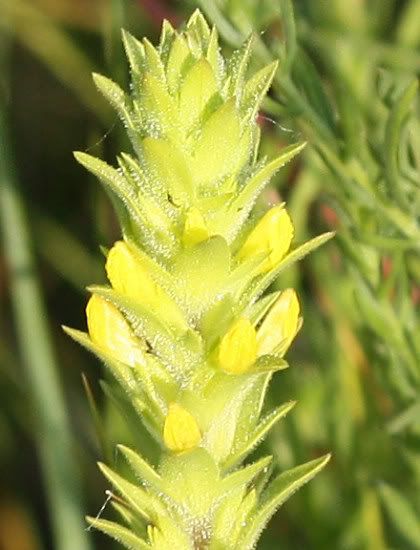
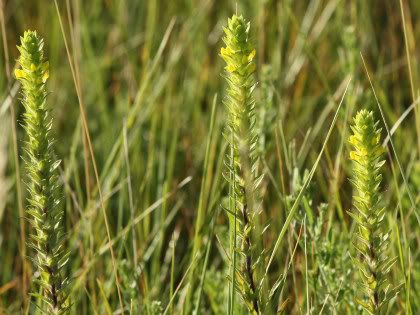
Walk In The Field Part 31 - Owl Clover


npwrc
Owl Clover (Orthocarpus luteus)
Scrophulariaceae (The Figwort Family)

Quote from npwrc:
I have no idea why this plant received the colloquial name "owl clover," although the rounded tops of the plants do resemble owls' heads, with the projecting flowers forming the "ears."

usda
Orthocarpus luteus Nutt.
yellow owl's-clover
Well, THAT pic really nailed it for me. I have pics very similar. Also see full size yardstick picture (That's inches shown.) I thought of that too. But my yardstick won't stay in the ground by itself and I can't hold it and take the pic at the same time. I'm thinking of making a stake out of it OR making a stake and marking it with measurements.
davesgarden
Pronunciation: skrof-yoo-larr-ee-AY-see-ee
Alternative Pronunciation: skrof-yoo-larr-ee-AY-see-eye

Sunday, July 26, 2009

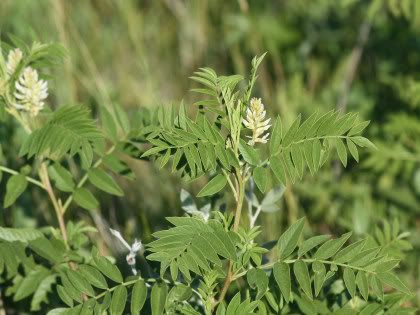
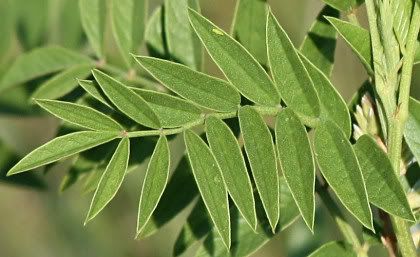
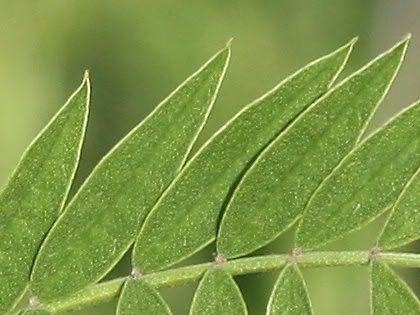
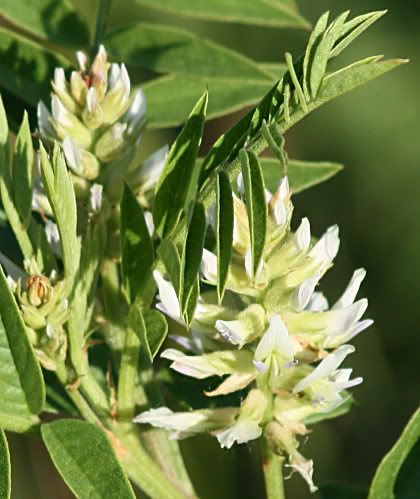
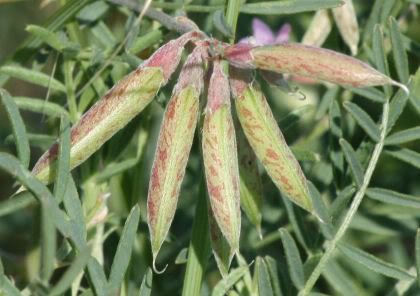
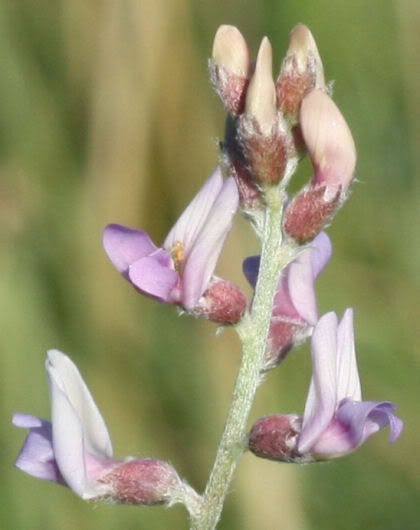
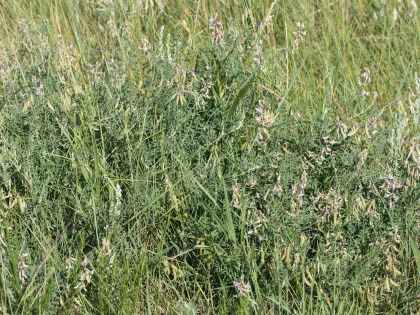
Walk In The Field Part 30 - Wild Licorice


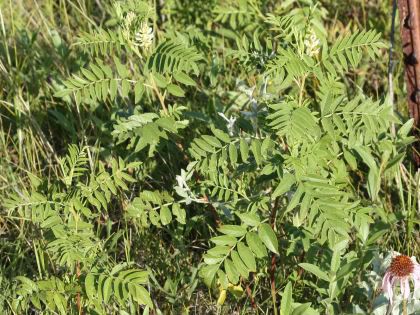
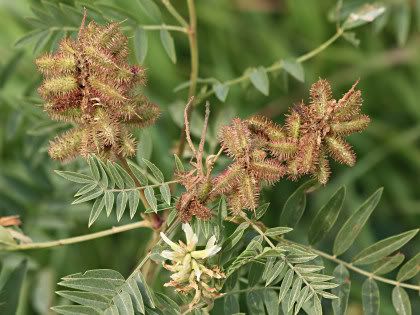
I thought this was yet another vetch, but after looking thru the Bean Family yet again, I think it is Wild Licorice.

I thought the leaves were wonderful:


Blossom:


Full Plant:


npwrc
npwrc2
Google Images
ndsu
Common Names: American licorice, Wild licorice
Species: Glycyrrhiza lepidota Pursh
Family: Fabaceae - Bean Family
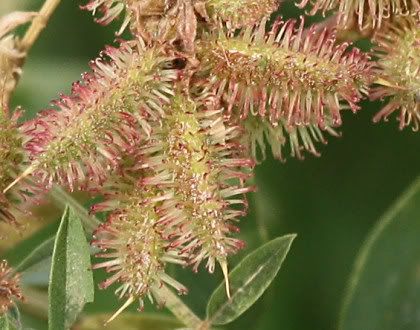
Seeds are burs.
usda
(Has a few nice illustrations of the plant.)

It looked similar to Canada Milkvetch (Astragalus candensis)?
Licorice seems to have a shorter flower bunch (racemes)?

UPDATE 4 Aug 09
I found burs. Saw a bunch of wild licorice roadside and took pics.

Walk In The Field Part 29 - Vexed by the Vetch

Here's another vetch.
I'm vexed by the vetches because I can't distinguish between the many different varieties.
But hey, I got beans on this one.

Beans/Legume (with some leaf detail):


Blossom:


The full plant was a messy mass:


And what is it?
My guess would be
American Vetch (Vicia americana)

Googling tells me the blossom and legume both look similar, and the ferny leaves of course.

npwrc:
American Vetch
Fabaceae
(Lists the Vetches native to North Dakota)

plants.usda.gov
Kingdom Plantae – Plants
Subkingdom Tracheobionta – Vascular plants
Superdivision Spermatophyta – Seed plants
Division Magnoliophyta – Flowering plants
Class Magnoliopsida – Dicotyledons
Subclass Rosidae
Order Fabales
Family Fabaceae – Pea family
Genus Astragalus L. – milkvetch P
Contains 419 Species and 688 accepted taxa overall

MY NOTE:
Size/proportion: Actual size of beans is about 3/4 inch long. So the beans are very tiny, almost unnoticeable. Similar with the flowers.

Walk In The Field Part 28

A nice sunrise view from the field:


I added a light blue gradient to the sky because it looked really blah.

Later, a little closer:

I liked the swirly lines in it.


I thought things would be winding down out there, but no.
Now, I've noticed a wave of NEW stuff I've never seen before.
It's endless.

So lots of things happening out there.

Birds are singing, bees are buzzing, butterflies are flying, and the yellow cones and purple clover cones are now seen everywhere (along with the Echincea) in bigger groups as they blossom and the colors pop in the field.


It amazes me how much shows up in the field once the plants blossom. At first it just looked like a field of grass, nothing too interesting. But there is an enormous amount of variety, life, activity out there. I'm getting to know what plants look like before they blossom, something I hadn't really noticed before. The tele distorts my sense of size and proportion though, so I need to be mindful of that. But it is so much fun going home and looking at the plants close up. Wow! Amazing, the detail I get with my camera and tele that my eyes don't see or notice.


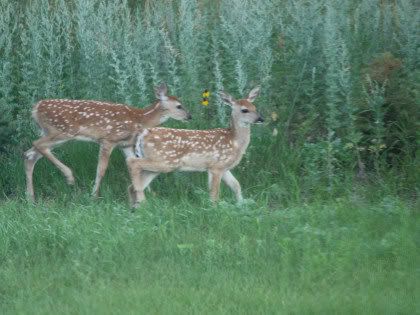
Hey, we have our usual fawns now too. Two does, two fawns. Gotta be up early to see those. Here's a pic I snapped at 6:45 am, so high ISO to get the shot.