Showing posts with label Botany. Show all posts

Monday, July 02, 2012

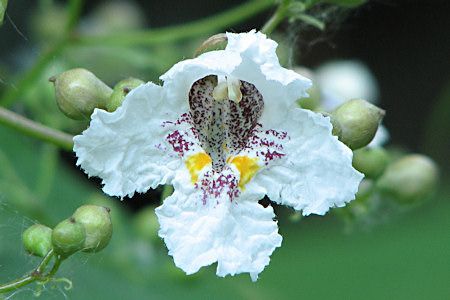
Cigar Tree Blossoms

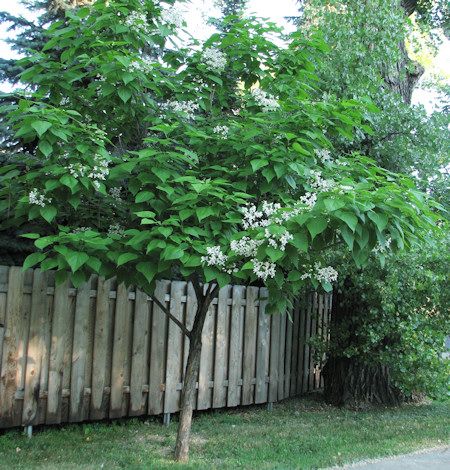
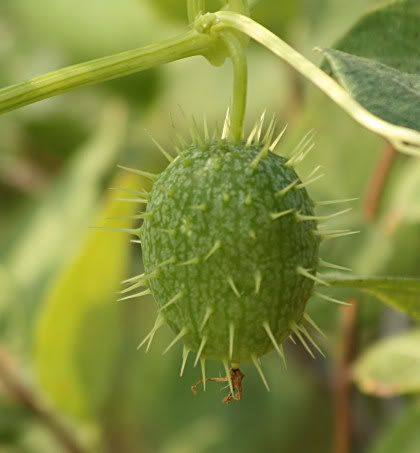
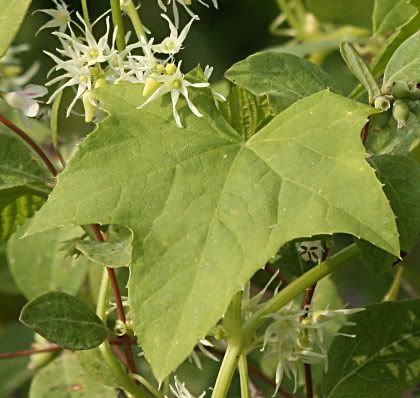
Well, I finally got my cigar tree blossoms pictures.
Blooms late June, early July, evidently.


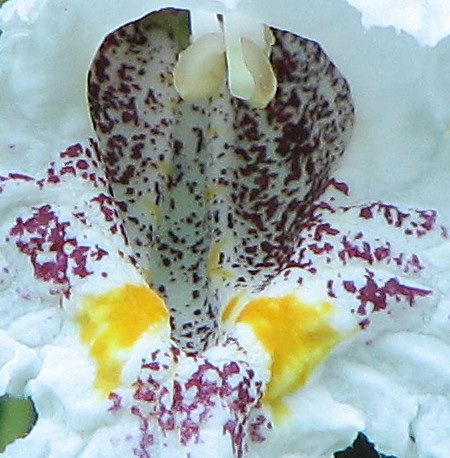
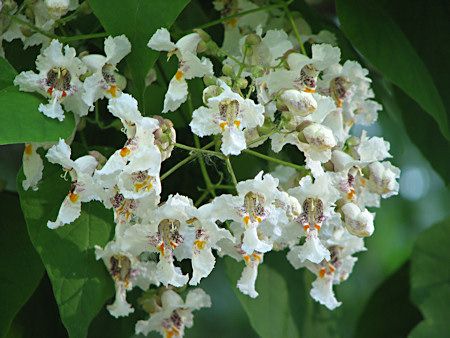
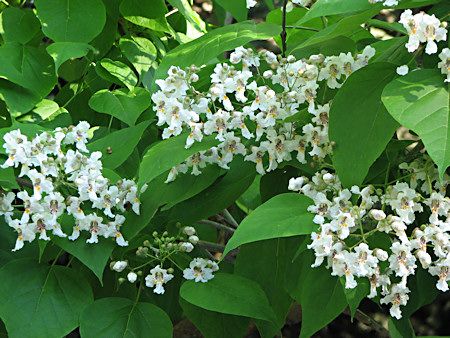
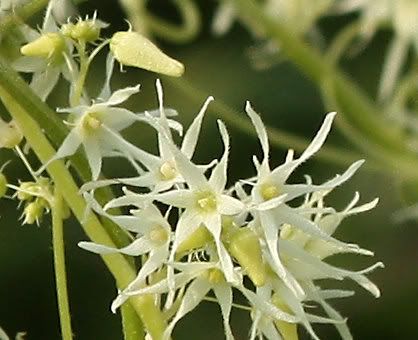
The blossoms are beautiful and interestingly shaped, come in clumps, and smell wonderful.
White, with purple and gold.


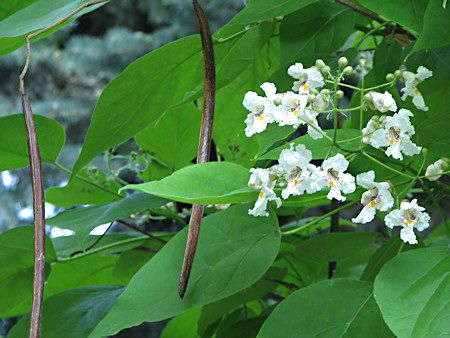
Here's a photo of the leaves, blossoms, and last year's "string beans" fruit which is what captured my attention originally when I saw the trees. Last year's, so brown in color, but normally green when new.


The full tree was in a spot that is difficult to capture on camera, but here is the best I could get. Not a very big tree.


I love this tree.

previously
google images

Tuesday, June 19, 2012

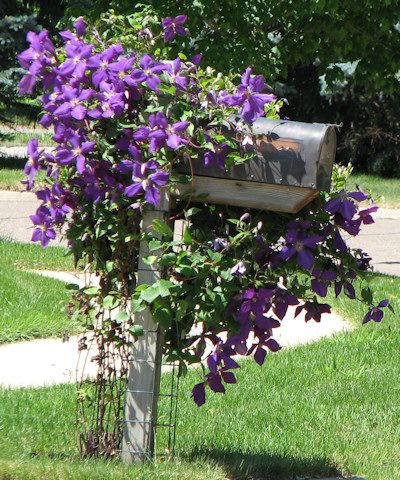
Clematis Mailbox


I thought this mailbox looked so pretty with the flowing plant around it.
The plant is Clematis (KLEM-uh-tiss). The blossoms look like cultivar Jackmanii.
I quickly snapped it from the car, so didn't get any closeups.

Links:
itis
Common Name: Jackman's clematis
Taxonomic Hierarchy

davesgarden
Family: Ranunculaceae (ra-nun-kew-LAY-see-ee)
Genus: Clematis (KLEM-uh-tiss)
Cultivar: Jackmanii
Synonym:Clematis x jackmanii

wiki
Hardy to USDA Zone 4a

Tuesday, April 03, 2012

Forsynthias

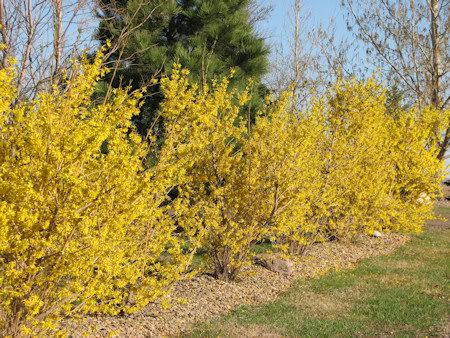
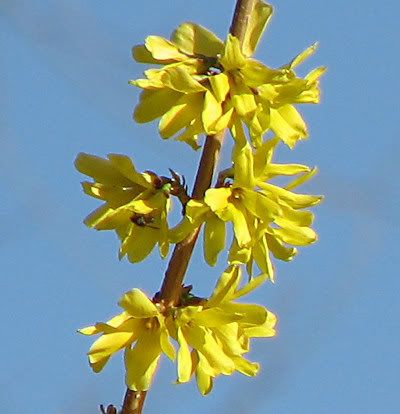
Very pretty blazing mustard yellow that really pops in the landscape.
I took photos and tried to identify.
I think it's some kind of forsynthia.

Shrub view looks more mustardy toned yellow:


Than the closeups:


Possibilities for Zones 3&4:
Meadowlark forsythia, 8-10 feet height
Northern gold forsythia, 6-8 feet height
New Hampshire gold and sunrise varieties, 4 to 5 feet height
Gold tide or citrus swizzle, 1 1/2 to 2 1/2 feet height, 4 feet wide

Ref:
ag.ndsu
jamestownsun

Thursday, November 17, 2011

The Downy and The Goldenrod

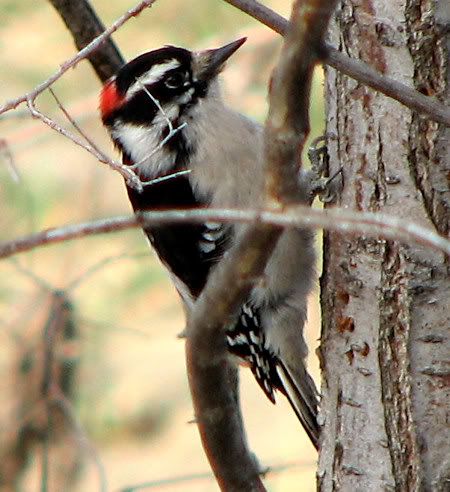
I found an interesting tidbit about the downy woodpecker and the goldenrod plant.
Both are common/abundant in North Dakota, so maybe I'll get a chance to photograph them together some day.
The article said "Canada" goldenrod?
(Mag quote: "It attacks two species within the Canada goldenrod complex almost exclusively.")

Winter Treat For Downies
Birdwatching magazine December 2011 issue

See also:
fcps.edu
via
reddit

Here's a photo of a downy I took recently in November 2011.

Blogged previously here.
The hairy woodpecker looks very similar but is bigger.

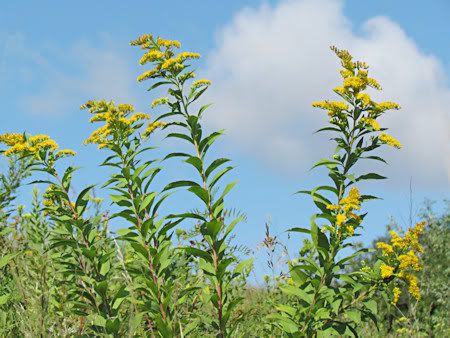
Here's a photo of goldenrod I took in August 2011, which is the month it is plentiful all over the state.
Not sure if it's Canada goldenrod.


Blogged previously here.

There are 5 kinds of goldenrod in North Dakota.
npwrc
Asteraceae (The Aster Family)

MORE LINKS:

birdwatching
Goldenrod Bonus

From the same issue Birdwatching magazine:
ID Tips for the Pine Siskin
And
Peregrine Falcon vs. Snowy Owl

Saturday, September 25, 2010

Buckeye


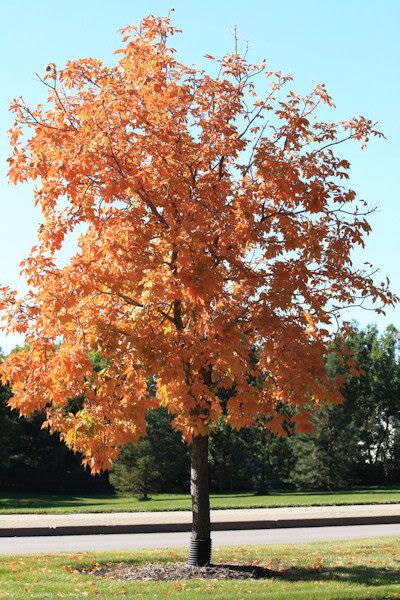
This must be an Ohio Buckeye (Aesculus glabra).
The whole tree looked lush orange. Up close the leaf colors ranged from yellow to deep orange. Yummy colors.

Here's a photo of the deep orange part:


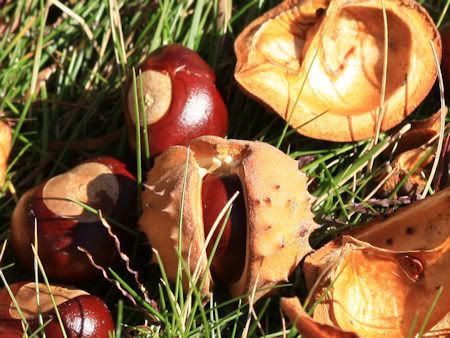
The shell/nut seed reminded me of a hazelnut inside a prickly walnut shell.


A similar tree, the horse-chestnut, is bigger and doesn't grow here.

ndsu1
"Ohio buckeye (Aesculus glabra) leaves have five to seven toothed leaflets arising at a common point (as the fans on a pinwheel). The leaflets are 3 to 6 inches long. The large showy flowers appear in clusters at the ends of the branches shortly after leafing in the spring. The fruit is a large, 1 to 2 inches in diameter, leathery capsule. It contains a large round chestnut-brown, shiny seed that contains a light colored spot at its base. Not native. New hybrid cultivars, medium-sized in stature, deserve greater attention for planting as residential and ornamental trees. Select 'Autumn Splendor' and 'Homestead' cultivars for leaf scorch resistance and reddish-orange fall color."

ndsu2
"The true horse-chestnut (A. hippocastanum) of the eastern and southern U.S. is beyond the range of hardiness in North Dakota.
If planted here it may suffer severe winter killing each year — if it survives at all.
The tree planted in North Dakota as buckeye (A. glabra) is hardy and also more variable.
Many hardy individuals are found growing well in North Dakota."

usda

Wednesday, September 15, 2010

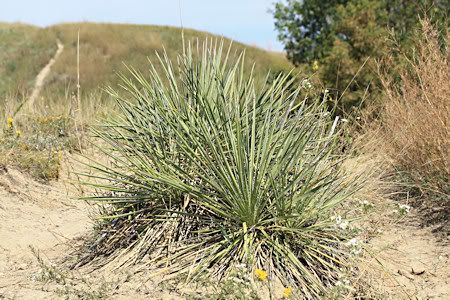
Another Native - Yucca

I'm pretty sure this is a Yucca plant.
I like them.


Agavaceae (The Agave Family)
Yucca (Yucca glauca)

npwrc
Native Wildflowers of the North Dakota Grasslands

Tuesday, June 01, 2010

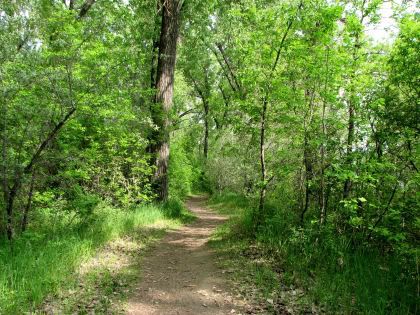
Photo Walk - New Trail

New trail, yippy skippy.


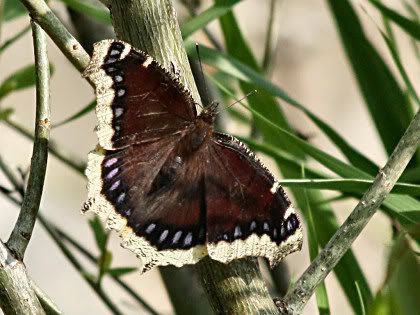
Mourning Cloak (Nymphalis antiopa):

bugguide
enature
wiki
butterfliesandmoths

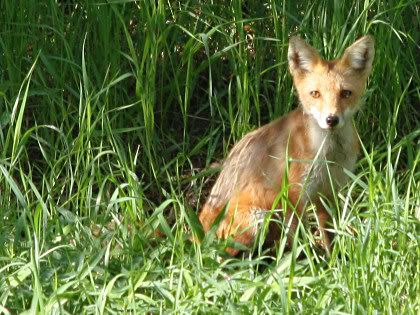
Fox:

Small Mammals of ND

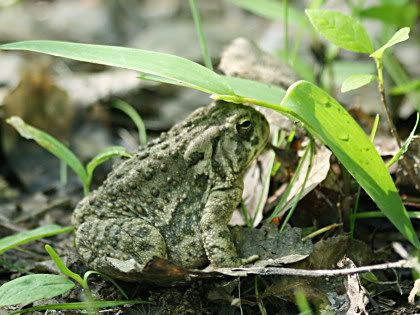
Toad:

Could barely see this little guy, very camouflaged.
Toad vs Frog
Reptiles and Amphibians of North Dakota
Woodhouse's Toad (Bufo woodhousii), maybe?
enature

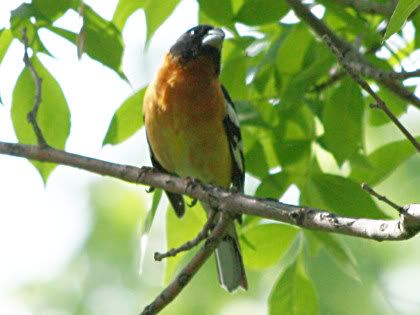
My first pic of
Black-headed Grosbeak (Pheucticus melanocephalus):

npwrc
cornell
enature
"Voice: Rich warble similar to that of a robin but softer, sweeter, and faster."
(I thought it was a robin, before I saw it in my telephoto lens, because it sounded like a robin.)

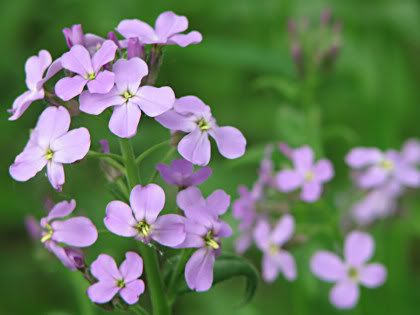
Flowers:

ID by family
Mustard Family
Looks like a Sweet rocket (Hesperis matronalis).
google images

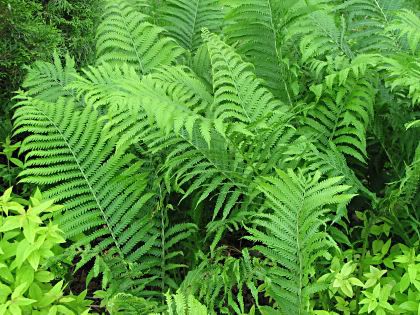
Fern


Wonderful ferny stuff. I want some.
It was difficult getting a good photography angle on it.
I'm not sure what kind of fern it is. Googled for ferns and North Dakota. Found three possibilities.

Looks like the:
Matteuccia struthiopteris (L.) Todaro (ostrich fern)
usda
npwrc
google images

Ferns for ND
Native Plants for Landscape Use in North Dakota
Ferns
(GOOD link. Tons of plants listed for ND and also other states as well. See Tables of Contents.)

Also mentioned:
Botrychium virginianum (rattlesnake fern)
usda
npwrc
google images

Cystopteris fragilis (fragile fern)
Must be the
Cystopteris fragilis (L.) Bernh.
brittle bladderfern
usda
google images

Monday, August 17, 2009

Goldenrod


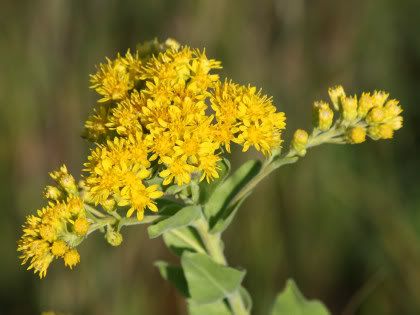
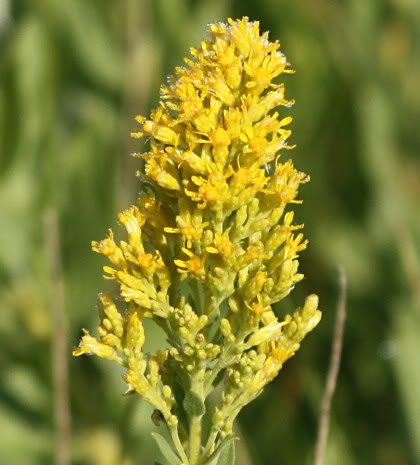
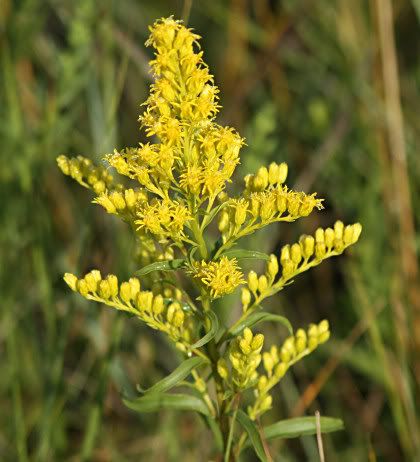
About the only thing I have yet to post from the field are different kinds of goldernrod.
It's taking a long time to blossom and I'm not getting very good photos of it. Seems like there is too much yellow and the pics lack definition/contrast and look blah.

I'll post some closeups of what's blossoming so far, and that's probably it. I've lost interest in it.


(Those white spots are morning dew.)


npwrc
Under Asteraceae (The Aster Family)
Shows 5 types of goldenrod:
1. Canada Goldenrod (Solidago canadensis)
2. Prairie [Missouri] Goldenrod (Solidago missouriensis)
3. Soft Goldenrod (Solidago mollis)
4. Gray Goldenrod (Solidago nemoralis)
5. Rigid Goldenrod (Solidago rigida)

That about wraps it up for My Walk In The Field Series.

So month of August:
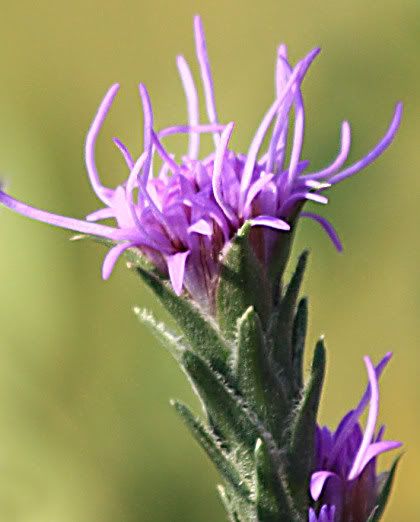
Goldenrod
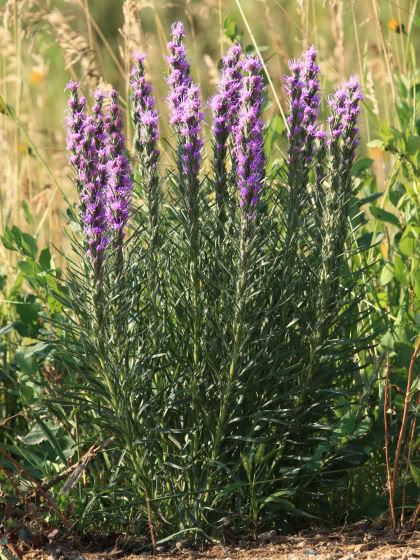
Blazing Star
Sunflowers
Curlytop Gumweed

Month of July:
Purple Coneflowers
Prairie Coneflowers
Prairie Clover
Wild Bergamot (Beebalm)
And more - July is the booming month for prairie wildflowers.

Wednesday, August 12, 2009

Tuesday, August 04, 2009

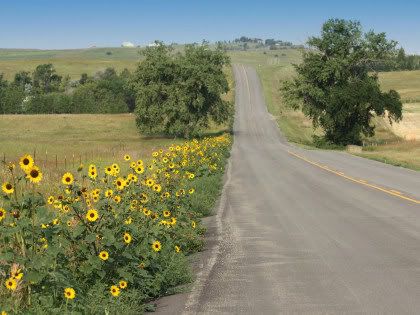
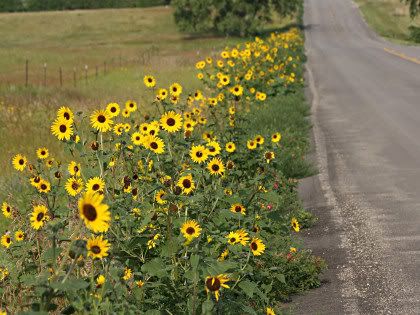
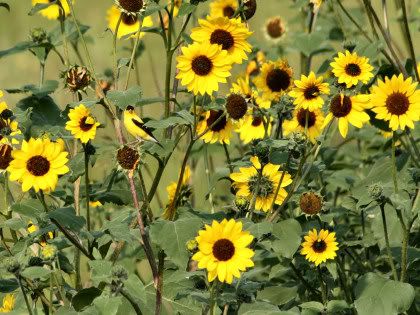
Sunflower Road


I tried different angles on the sunflower road view and I like these the best.

There was also this beauty further in the ditch:


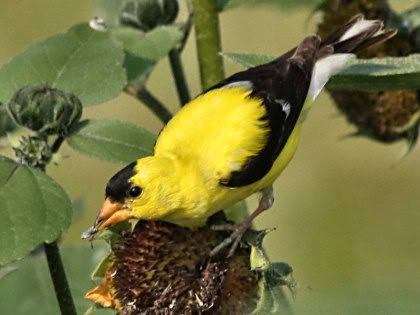
And surprise, I had company.


He was the exact same color as the sunflowers.
Talk about blending in.


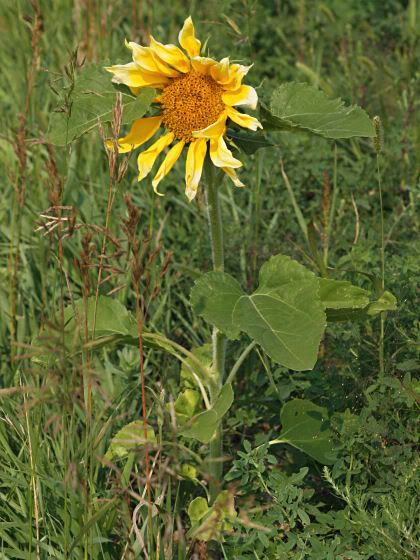
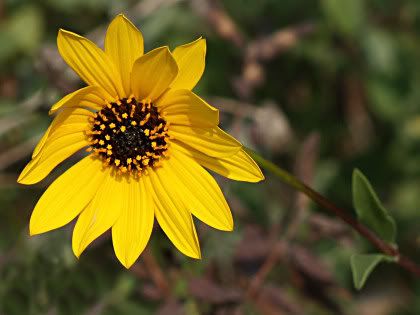
Then there was this sunflower which was very different and stood out from the rest along the road as we were driving by.


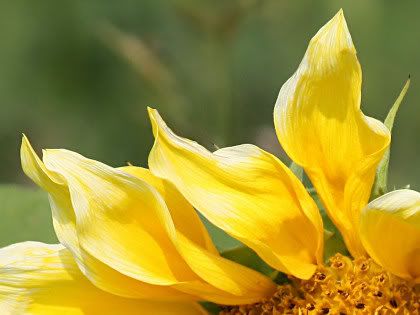
The petals (ray flowers) were fabulous:


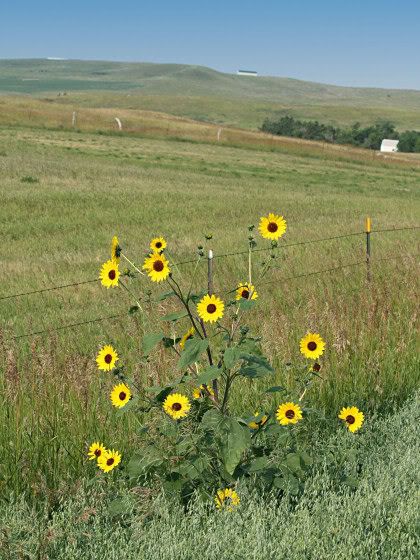
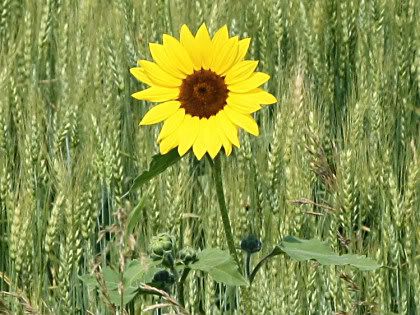
Later, we saw this one lone sunflower in a field of wheat or grain of some sort. The result was a happy surprise with an unusual background effect to it. I like it.


Common sunflower (Helianthus annuus L.)

usda

efloras2

davesgarden
Family: Asteraceae (ass-ter-AY-see-ee)
Genus: Helianthus (hee-lee-AN-thus)
Species: annuus (AN-yoo-us)

(At first I didn't catch that double u in annuus.)

wiki
Sunflower varieties list

Try Google Images on Autumn Beauty sunflower.
Or how about Peach Passion sunflower.

Definitions:
phototropism
An orienting response to light.

heliotropism
An orienting response to the sun.

tropism
An involuntary orienting response; positive or negative reaction to a stimulus source.

Blue Flax Field

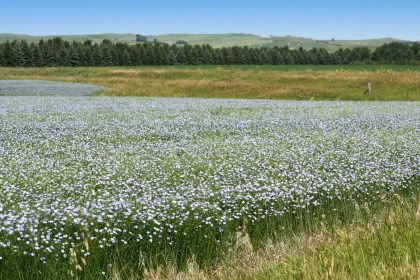
Looking for a good angle on a blue flax field:


Didn't really find one. I think it might be a prettier field once all the buds blossom? It seemed fairly muted.


The kind grown for oil and fiber is common flax (Linum usatissimum).
Linaceae (The Flax Family)
usda


I never found any WILD blue flax in our field.
npwrc
Blue Flax (Linum perenne var. lewisii)
"Unlike the annual common flax grown for oil and fiber, blue flax is a perennial with a long taproot."

npwrc2
Wild blue flax (Linium lewisii)

Sunday, August 02, 2009

Walk In The Field Part 35 - Grooved Flax


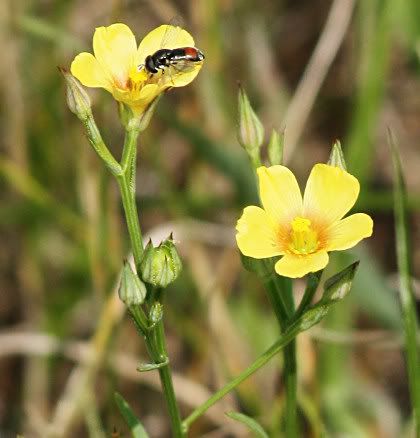
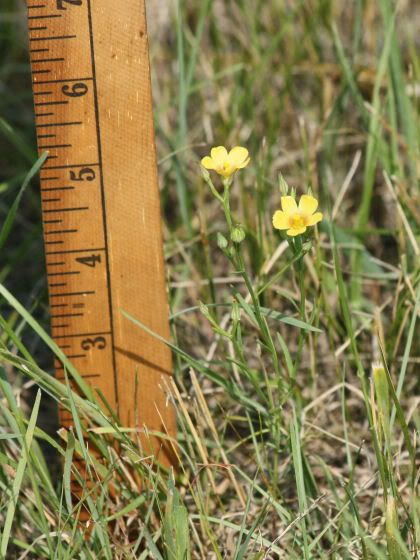
I think this plant is Grooved Flax (Linum sulcatum).


Only 5 inches high. I had a companion to hold the yardstick, so we measured many of the plants that trip. There was another grooved flax plant that was about twice as tall, about 10-12" maybe? So it does get taller than this.

Walk In The Field Part 34 - Stiff Sunflower


I only saw a few sunflowers in the field so far, but I'm expecting more to pop up.

Identifying sunflowers seemed difficult.
I think this one is Stiff Sunflower (Helianthus rigidus).

Synonym:
Helianthus pauciflorus

Walk In The Field Part 33 - Wild Cucumber


Wild cucumber Echinocystis lobata

Found down by the creek wrapped around some buckbrush.

Plant Field Guides


I checked out a bunch of botany books at the library. I can't say that the books are any better information than what I can find online. I liked having something in print to browse thru.

Two books I liked and want to remember for future reference:

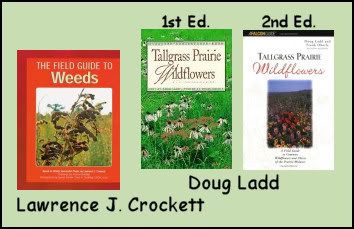
The Field Guide to Weeds (Spiral-bound), by Lawrence J. Crockett. Based on an older book entitled Wildly Successful Plants. ("Wildly Successful" - Liked that description of weeds.)

Quote from page 9 of Introduction:
"Thus we may not define a weed exclusively as a plant we do not want where it grows in garden, lawn, or landscaped highway. Both native and introduced weedy species conform to this definition, but introduced species may, in addition, drive out our native wild species, denying them their former habitats and ecological niches."

Some plants of note:
Wild morning glory (Convolvulus arvense)
Wild cucumber (Echinocystis lobata)
Poison ivy, (Rhus radicans)
Virginia creeper (Parthenocissus quinquefolia)
Cattail (Typha augustifolia)
Yellow foxtail grass (Setaria viridis)
Canada golden rod (Solidago canadensis)
Milkweed (Asclepsia syriaca)

I thought the photos and illustration of each plant was of good quality for identification purposes.

I did find and browse thru "Botany in a Day" by Thomas J. Elpel (mentioned earlier on my blog). I didn't like how the information was arranged and it wasn't what I was looking for. Too broad and data overload.

The other book that I liked was Tallgrass Prairie Wildflowers, by Doug Ladd. (c. 1995 1st Ed.)

NOTE: The c. 2005 2nd edition contains an added section on weeds.

I liked that it arranged the flowers by color. It featured a lot of the plants I found in the field. And even if it didn't have the exact same species, it steered me in the right direction. Good photos for identification purposes. Field guide format.

Thursday, July 30, 2009

Walk In The Field Part 32 - Curlycup Gumweed


Lots of unknown plants that I'm waiting to see blossom before I id and post.

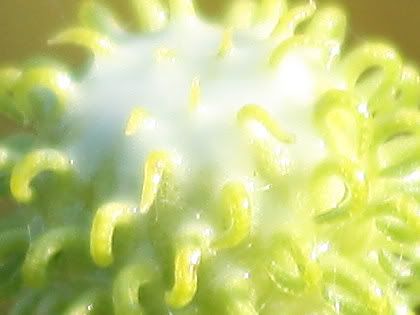
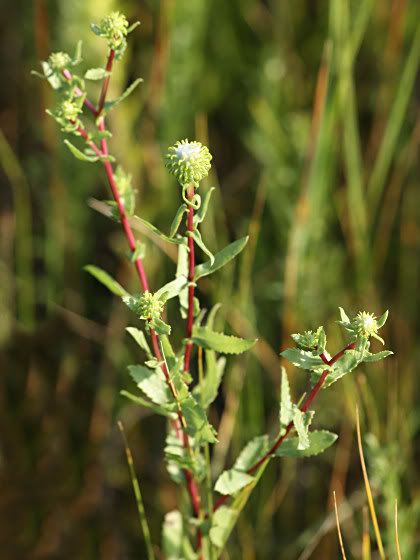
This Curlycup gumweed hasn't blossomed yet, but I was able to id, anyway.
It's called "noxious" and/or "invader," but from a photographer's telephoto perspective it's fabulous stuff.

npwrc
Curlycup gumweed (Grindelia squarrosa)
Family name: Aster (Asteraceae)

npwrc2
"...a biennial that blooms and dies during its second growing season.

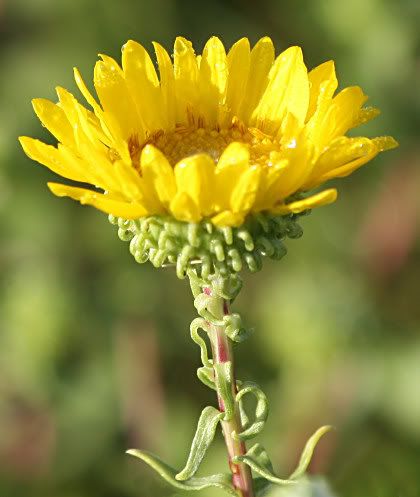
The most characteristic feature is the curly involucre (group of scale-like leaves around the flower head) which exudes copious amounts of sticky resin. "

ndsu
Other names: Tarweed, Resinweed
Species: Grindelia squarrosa (Pursh) Dun.

usda
Grindelia squarrosa (Pursh) Dunal

usda2
Yardstick image

I'll post some flowers when they blossom and if I get some good shots of them.

UPDATE
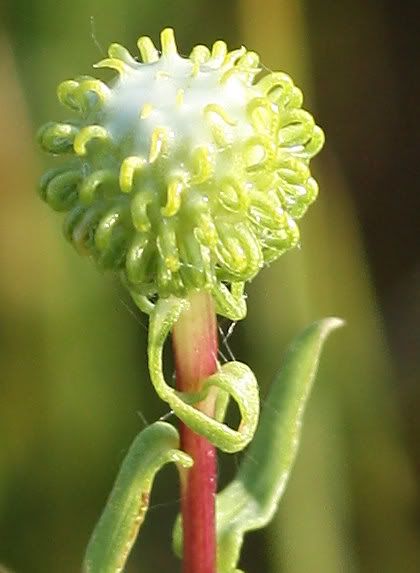
Here's a nice blossom:


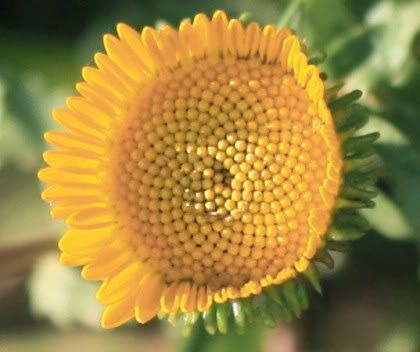
I like this spiral: